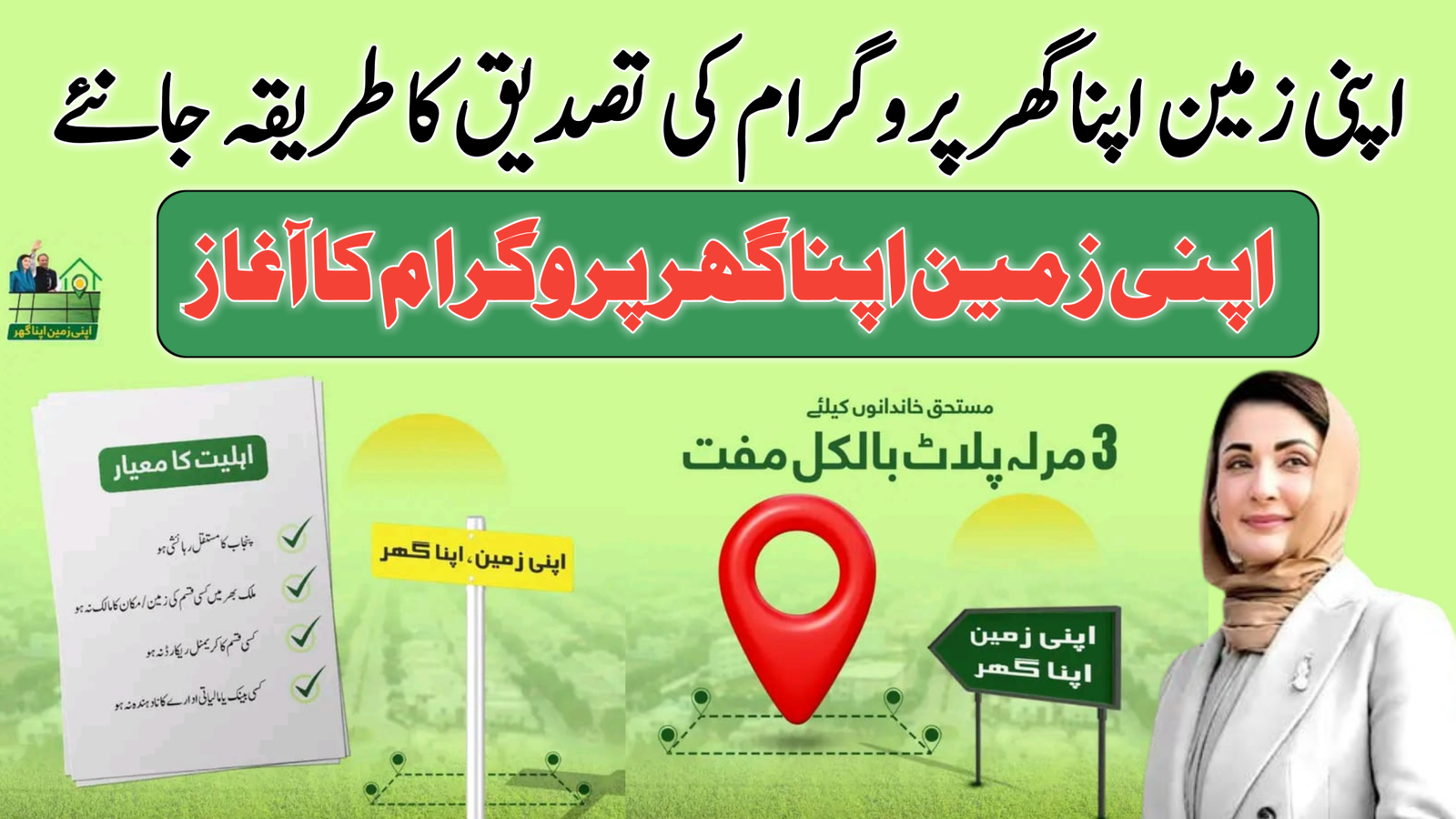
The Apni Zameen Apna Ghar Program 2025, launched by the Government of Punjab under the visionary leadership of Chief Minister Maryam Nawaz, aims to provide residential plots and ready-made houses to deserving, low-income, and landless families across the province. The program is designed to uplift the underprivileged population by offering them the security and dignity of owning a home. However, in order to maintain transparency and ensure that only the truly eligible beneficiaries receive this support, the government has implemented a strict verification procedure.
In this detailed guide, we will walk you through the complete verification process of the Apni Zameen Apna Ghar scheme, step by step. We’ll also cover the required documents, common mistakes to avoid, and how to seek assistance. This article is written in a simple and easy-to-understand language to ensure that all applicants, regardless of education level, can fully comprehend the procedure.
What is the Apni Zameen Apna Ghar Program?
The Apni Zameen Apna Ghar Program is a pro-poor housing initiative by the Punjab Government. The primary objective is to help those who have been living without secure housing for years—families who cannot afford land or homes due to financial limitations. Through this scheme, the government either provides a small residential plot or a pre-built house, depending on the applicant’s eligibility and area of residence.
The scheme is administered by the Punjab Land Records Authority (PLRA), in collaboration with local administrative bodies. The registration, verification, and final approval process is conducted in a transparent, step-by-step manner to prevent fraud and ensure fair distribution.
How to Apply for the Program
To become a part of this program, individuals need to apply online through the official portal. The government has made it easier for people to register themselves without visiting any office or facing long queues.
To apply, visit the official website https://azag.punjab.gov.pk. After logging in or creating an account, applicants must fill in their personal information such as their name, CNIC number, income details, marital status, and contact number. Applicants are also required to upload scanned copies of important documents like CNIC, income certificate, and utility bills. Once the form is submitted, the system generates a confirmation, and the verification process begins immediately.
Step-by-Step Verification Process
After registration, the government carries out a multi-stage verification process to confirm the authenticity of each applicant. This helps eliminate duplicate applications and ensures that only deserving families are selected. Here’s how the verification works:
1. Document Verification
The first step involves the review of all documents submitted during the application process. The authorities check whether the CNIC is valid and whether the income and residency details are consistent with the documents. If any document is missing, unclear, or fake, the application is automatically marked for rejection.
2. NADRA and Database Matching
Once the documents are verified, the applicant’s CNIC number is checked against the NADRA database. This is done to ensure that the applicant is a Pakistani citizen and that the family structure listed on the CNIC is accurate. This step also identifies if the applicant is linked with any existing land or property records.
3. Land Ownership Check
An essential part of the verification process is to confirm that the applicant or any of their immediate family members do not already own land or a house. The government uses PLRA’s digital land records to determine ownership. If a match is found, the application is disqualified. This ensures that only landless individuals benefit from the scheme.
4. Physical Verification (If Required)
In some cases, government representatives may conduct a field visit to verify the living conditions of the applicant. This is especially true in cases where documents raise any doubts or where the applicant claims extreme poverty. A physical inspection is also done to confirm the applicant’s current address and the number of people living in the household.
5. Final Committee Review and Approval
After all verification steps are completed, the application is sent to a district-level selection committee. The committee reviews the entire profile of the applicant, including the report from the home visit, income level, and property status. If the committee approves, the applicant’s name is added to the final list of selected beneficiaries.
Required Documents for Verification
To complete the verification successfully, the applicant must submit the following documents during the registration process:
- Copy of valid Computerized National Identity Card (CNIC)
- Proof of income (e.g., salary slip, income certificate, or proof of BISP assistance)
- Recent utility bill or rent agreement as proof of residence
- Widow certificate (if the applicant is a widow)
- Disability certificate (for physically disabled individuals)
- Orphan certificate (if applying under the orphan category)
All documents must be original and up-to-date. Tampered, expired, or forged documents will immediately lead to rejection.
Common Mistakes That Lead to Rejection
Many applications get rejected not due to fraud, but because of avoidable mistakes. Here are some of the most common reasons why applications are disqualified:
- Submitting fake or expired CNICs
- Already owning land or a house
- Providing false income or family details
- Uploading incomplete or unclear documents
- Making multiple submissions from the same family
- Failing to respond to verification calls or home visit requests
Applicants are strongly advised to double-check every piece of information and ensure that documents are complete and readable before submission.
Final Selection and Allotment Process
Once an application has been successfully verified and approved by the district committee, the applicant is contacted through the phone number provided at the time of registration. They may be asked to visit the nearest PLRA office to receive their official allotment documents, or they may receive instructions through SMS about the next steps.
Selected beneficiaries are either allotted a residential plot or a ready-built house, depending on their preference, family size, and availability in their district. The entire selection and allotment process is merit-based and monitored by government officials, ensuring fairness at every level.
Official Helpline for Assistance
The government has also established a dedicated support system to assist applicants who face any issues during registration or verification. If you need help, you can contact the helpline:
- Toll-Free Number: 0800-09100
- Email Support: info@azag.punjab.gov.pk
- Or visit your nearest PLRA office for in-person guidance.
Conclusion
The Apni Zameen Apna Ghar Program is a highly beneficial initiative that promises to transform the lives of countless underprivileged families in Punjab. However, due to high demand and the government’s commitment to transparency, applicants must go through a detailed verification process before receiving any benefits.
It is crucial to provide accurate and complete information, attach valid documents, and avoid any form of misrepresentation. Patience and honesty during the process will greatly increase your chances of being selected. This program is not just about owning a piece of land or a home—it’s about restoring dignity and providing hope to those who need it most.
Also Read More: Required Documentation for the Apni Zameen Apna Ghar Scheme